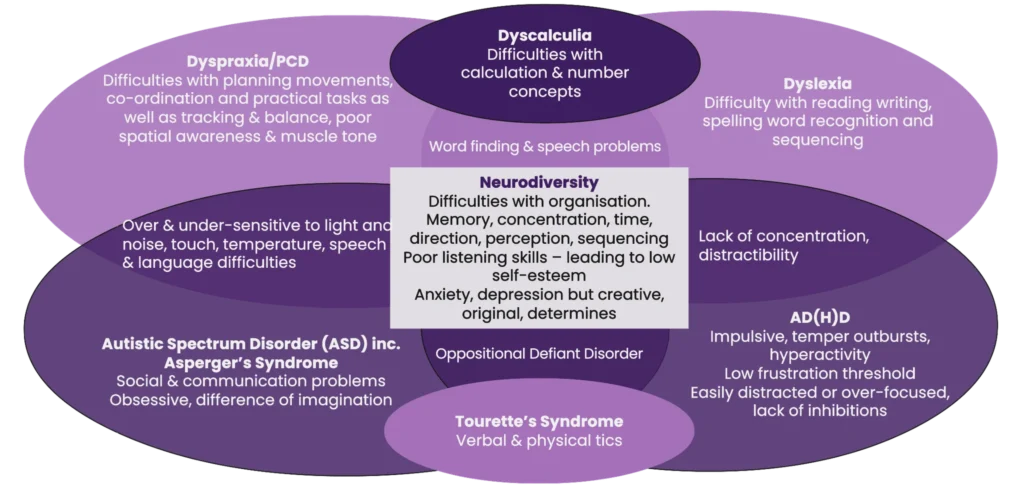
It’s common for people with ADHD to experience symptoms of other neurodevelopmental conditions, such as autism spectrum condition (ASC), Tourette syndrome, obsessive-compulsive disorder (OCD), dyslexia and dyspraxia. This is known as coexistence or co-occurrence.
UK studies on co-existence show:
- Approximately one in two people with ADHD also have dyslexia
- Approximately one in two people with ADHD also have dyspraxia
- Nine out of ten people with Tourette syndromes also have ADHD
- Two out of three people with ADHD have autistic spectrum traits – and people with ADHD are eight times more likely to meet the criteria for diagnosis with autism spectrum condition (ASC)
While it’s common for people with neurodevelopmental conditions such as ADHD to also experience mental health conditions, lack of understanding means it’s also common for neurodevelopmental conditions to be misdiagnosed as mental illness. Many people are treated for depression or anxiety, only to discover, years later, that they’re neurodivergent.
ADHD can also coexist with certain physical health conditions, such as Ehlers-Danlos syndromes (EDS) – sometimes known as hypermobility (though not all EDS patients are hypermobile) – Mast Cell Activation Syndrome (MCAS) and coeliac disease.
Some also consider giftedness to be a form of neurodivergence, particularly in rare cases such as savant syndrome or hyperthymesia (a highly detailed autobiographical memory).